Bio-Oil for Stretch Marks During and After Pregnancy: Does It Actually Work?
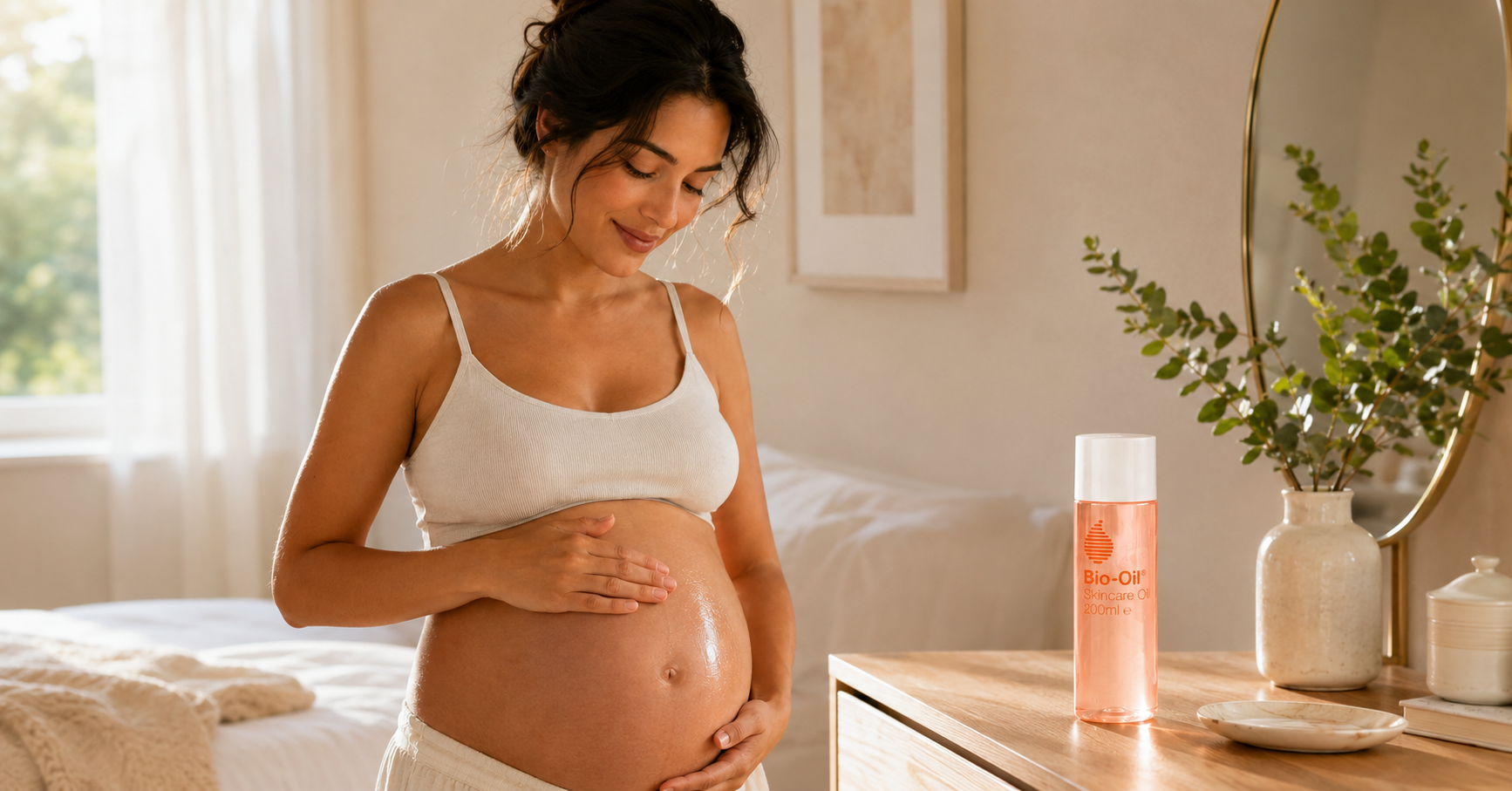
Tell anyone you are pregnant and the advice starts flowing. Somewhere near the top of that list someone hands you a bottle of Bio-Oil.
It is the most famous name in the bio oil stretch marks pregnancy talk and millions of mums swear by it. But what does the science actually say? We read the trials. Then we used the oil through a real pregnancy and well beyond it. Here is the honest picture with no miracle promises.
In This Post
- Why pregnancy causes stretch marks
- What is actually in Bio-Oil
- What the studies really say
- Our results, honestly
- How and when to apply it
- Alternatives if it is not for you
Why Pregnancy Causes Stretch Marks
Stretch marks appear when skin grows faster than it can keep up with. The deeper layer of skin gets tiny tears. Those tears surface as red or purple lines that slowly fade to pale silvery streaks.
They are very common. Reviews of pregnancy skin studies put the figure somewhere between 5 and 9 women in every 10, and the marks show up most on the bump, breasts, hips and thighs. Genes carry the biggest weight here. Shifting [Link the word ‘hormones’ to the Understanding Pregnancy Hormones post once it is published.] make the skin more fragile too.
So here is the first honest truth. If stretch marks run in your family no bottle can fully stop them. The real question is whether Bio-Oil can soften the blow.
What Is Actually in Bio-Oil?
The Bio-Oil Skincare Oil is a light dry-feel oil. These are the parts that do the work:
- PurCellin Oil: Bio-Oil’s own lightweight carrier oil. It pulls the formula into the skin fast instead of leaving a greasy film on top.
- Vitamin E: a skin-conditioning vitamin that supports the skin barrier.
- Plant oils: calendula, lavender, rosemary and chamomile. These four give the oil its light familiar scent.
- Vitamin A (retinyl palmitate): a small amount, added to support skin renewal.
A note on the vitamin A. Official advice says to avoid strong retinoid creams in pregnancy. Bio-Oil states that the level in its formula is low and safe to use while pregnant. If you would rather skip all vitamin A skincare that is a fair call. Ask your midwife or simply start the oil after the birth.
What the Studies Really Say
On preventing stretch marks the evidence is weak for every product, not just this one. A Cochrane review of six trials found that rubbing creams and oils into the skin did not clearly stop the marks from forming. Anyone who promises prevention is overselling.
On improving how the marks look Bio-Oil stands on firmer ground. Small trials funded by the brand found that many users saw the appearance of existing stretch marks and scars improve after about eight weeks of twice-daily use. Improvement means softer, smoother, less noticeable. It does not mean gone.
On comfort the case is simple. Stretching skin turns dry and itchy and the NHS recommends moisturising to ease it. A daily oil massage genuinely helps with that whatever happens to the marks themselves.

Our Results, Honestly
We started at week 14 of pregnancy. The oil went into the bump, hips and thighs every morning and night. Itch relief came almost at once. The skin stayed soft and comfortable right through the third trimester.
Did marks still appear? A few did because genetics always gets a vote. They stayed mild though. After the birth we kept going on the faded ones. Two months on they looked softer and lighter than we had expected and far less obvious in the mirror.
The texture earns credit too. It sinks in within minutes and never stains clothes. One 200 ml bottle of twice-daily bump massage lasted us about two months.
How and When to Apply It
- Start early: most mums begin at the start of the second trimester when the bump first starts to grow.
- Twice a day: morning and evening, worked in gentle circles until the oil disappears.
- Cover the hotspots: bump, breasts, hips and thighs.
- Keep to unbroken skin: never use it on open or healing wounds. For a caesarean scar wait until the wound has fully closed and healed. Our C-section recovery guide maps the healing timeline week by week.
- Patch test first: a small dab on your inner arm, then a full day’s wait.
If Bio-Oil Is Not for You
No product suits everyone. If the scent bothers you or you want to skip vitamin A entirely a plain rich moisturiser handles the hydration job well. Our Aveeno Skin Relief lotion review covers a fragrance free favourite.
Then there is the cheapest treatment of all. Time. Most stretch marks fade a great deal on their own within a year of birth, going from angry red to quiet silver. Be patient with your body. It has done something remarkable, which is exactly the spirit of our postpartum recovery roadmap.
Quick Questions
Can it remove old, silvery stretch marks?
Be realistic here. Old marks are settled scars so expect modest softening at best. Bio-Oil works best on newer marks that are still red or purple.
Is it safe while breastfeeding?
Generally yes, as a body oil. Keep it well away from the nipple area so your baby does not feed on it and wash your hands after each use.
Is it only for stretch marks?
No. People also use it to soften the look of healed scars and to ease general dry skin. That is why one bottle tends to serve the whole household.
Final Verdict
Does Bio-Oil actually work? As an eraser no. Nothing is. As an itch-soother, a skin-softener and a fader of new marks over weeks of steady use, yes. It earns its famous reputation. 4 out of 5.
Get the Bio-Oil Skincare Oil here and stock the rest of your recovery kit in our mother care shop.