How to Help The Baby Sleep Anywhere: Blackout, Naps & Travel Routine
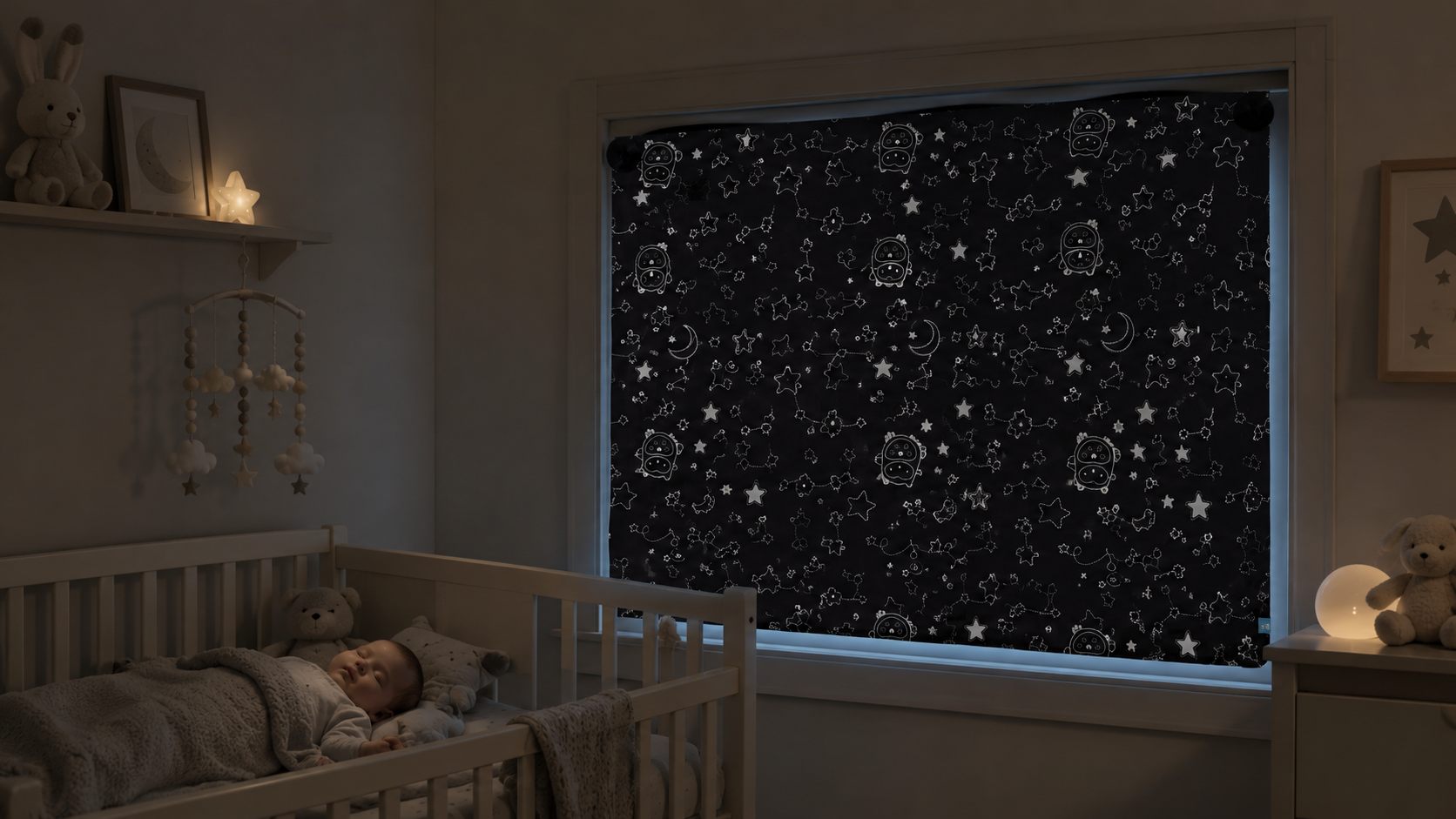
It is 8.45 pm in June, the sun is still blazing through the curtains, and your baby is staring at the ceiling like it is midday. Or it is nap time on holiday, and the rental apartment has blinds made of tissue paper.
If you have been searching for how to help baby sleep in a bright room, this guide is the full answer. A little sleep science, one brilliantly simple piece of kit, and a routine that travels, so your baby can nap anywhere from grandma’s spare room to a hotel in Spain.
Why Light Is the Enemy of Sleep
Here is the science, kept simple. Sleep is driven by a hormone called melatonin, and light is its off switch. When light hits the eyes, the brain reads it as daytime and holds the melatonin back. Darkness flips the switch and lets sleep come.
Babies’ body clocks only start settling into a day-and-night rhythm at around three to four months, and they are extra sensitive to light while that clock is forming. So a bright room at bedtime sends exactly the wrong message: wake up, the day is still on.
The UK makes this harder than most places. Summer sun sets after nine and rises before five, which explains the 5 am wake-ups that arrive every June like clockwork.
The Fix: Make Any Room Dark
The answer is blackout, and the portable kind beats curtains because it goes wherever your baby sleeps. Our pick is the Gro Company Ollie the Owl Portable Blackout Blind, and it could not be simpler.
- Suction cups, no tools: it sticks straight onto the window glass in under a minute and peels off without a trace.
- Proper darkness: the blackout fabric blocks the light that thin curtains let through, even at midsummer.
- Fits most windows: the adjustable fit covers standard window sizes at home and away.
- Packs tiny: it folds into its carry bag and weighs next to nothing, so it goes in the suitcase first.
- A friendly face: the owl-and-stars design makes the dark feel cosy rather than scary for older babies.
How We Use It
Summer evenings: up on the window an hour before bed, and the 9 pm sunshine problem simply stops existing. Bedtime went back to normal within two days.
Early mornings: the same trick works at the other end. With the dawn blocked, the 5 am lark started sleeping closer to a civilised hour.
Daytime naps: for the big lunchtime nap, a darker room means a longer, deeper sleep. For short catnaps out and about, do not stress about darkness at all. Pram and sling naps in daylight are completely fine, and our baby sling guide covers the on-the-go option.
Travel: this is where it pays for itself. Hotel rooms, holiday lets, and grandma’s house all have one thing in common: useless curtains. The blind goes up first, and the familiar darkness tells your baby this strange room is still a sleep room.
Beyond Blackout: The Nap-Anywhere Routine
Darkness is the foundation, but babies sleep best when everything feels familiar. Build a small, portable set of sleep cues and repeat them everywhere:
- Same sleep space rules: baby on their back, in a clear cot or travel cot with a firm flat mattress, and in the same room as you for at least the first six months. The NHS guide to helping your baby sleep covers the safe sleep basics.
- Same sleeping bag: the feel of their own sleeping bag is a powerful signal, wherever the cot is.
- Same wind-down: a short, repeatable routine. Feed, story or song, cuddle, down. Ten minutes, every time.
- Comfortable room: aim for 16 to 20 degrees, which is cooler than most people expect.
- Watch the wake windows: an overtired baby fights sleep harder, so start the wind-down before the meltdown.
One myth to drop on the way: there is no magic gadget that replaces routine, and expensive kit does not equal sleep. Our top 10 baby myths busted sorts the science from the sales pitch.
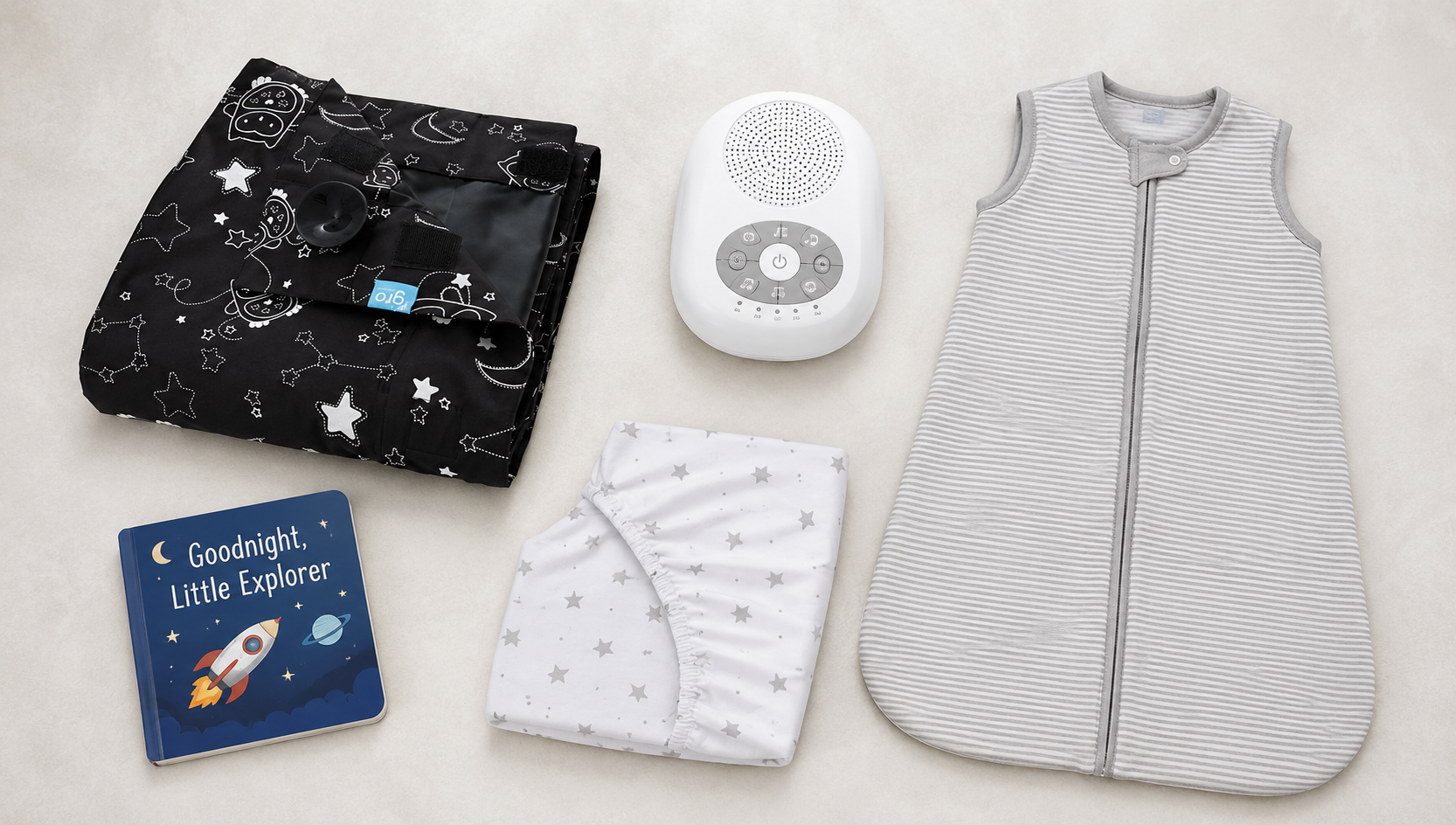
The Travel Sleep Checklist
- Portable blackout blind, packed first.
- Travel cot, plus your own fitted sheet that smells like home.
- Your baby’s usual sleeping bag.
- White noise, from a small machine or a phone app.
- The bedtime story or comfort routine items.
- A room thermometer, because holiday rooms run hot.
- The usual feed kit for the dream feed.
Do Not Forget Your Own Sleep
Every hour your baby sleeps better is an hour you can recover too, and in the first months that is not a luxury. Protecting your own rest is a core part of healing after birth, and the sleep section of our postpartum recovery roadmap has honest, practical ways to claw some back.
Quick Questions
How dark is dark enough?
For the long lunchtime nap and bedtime, aim for properly dark: you should struggle to read. For night feeds with older babies, a very dim night light is fine and saves you stubbed toes.
Will my baby get hooked on blackout and refuse to sleep anywhere bright?
No. Darkness is an environment, not a crutch, and it actually helps set the body clock. Babies who sleep well at home in the dark still manage daylight pram naps perfectly well.
Is a suction-cup blind safe in the nursery?
Yes, used sensibly. It fixes flat to the glass with no cords, which is exactly what you want near children. As with any window, keep the cot positioned away from the window and anything attached to it.
Final Thoughts
So, how to help baby sleep in a bright room? Block the light, repeat the cues, and keep the routine portable. One small owl on the window did more for our summer bedtimes than any gadget twice its price.
Get the Ollie the Owl Portable Blackout Blind here, and find the rest of your sleep kit in our baby care shop.