MAM Easy Start Anti-Colic Baby Bottles: Are They Really Worth It?
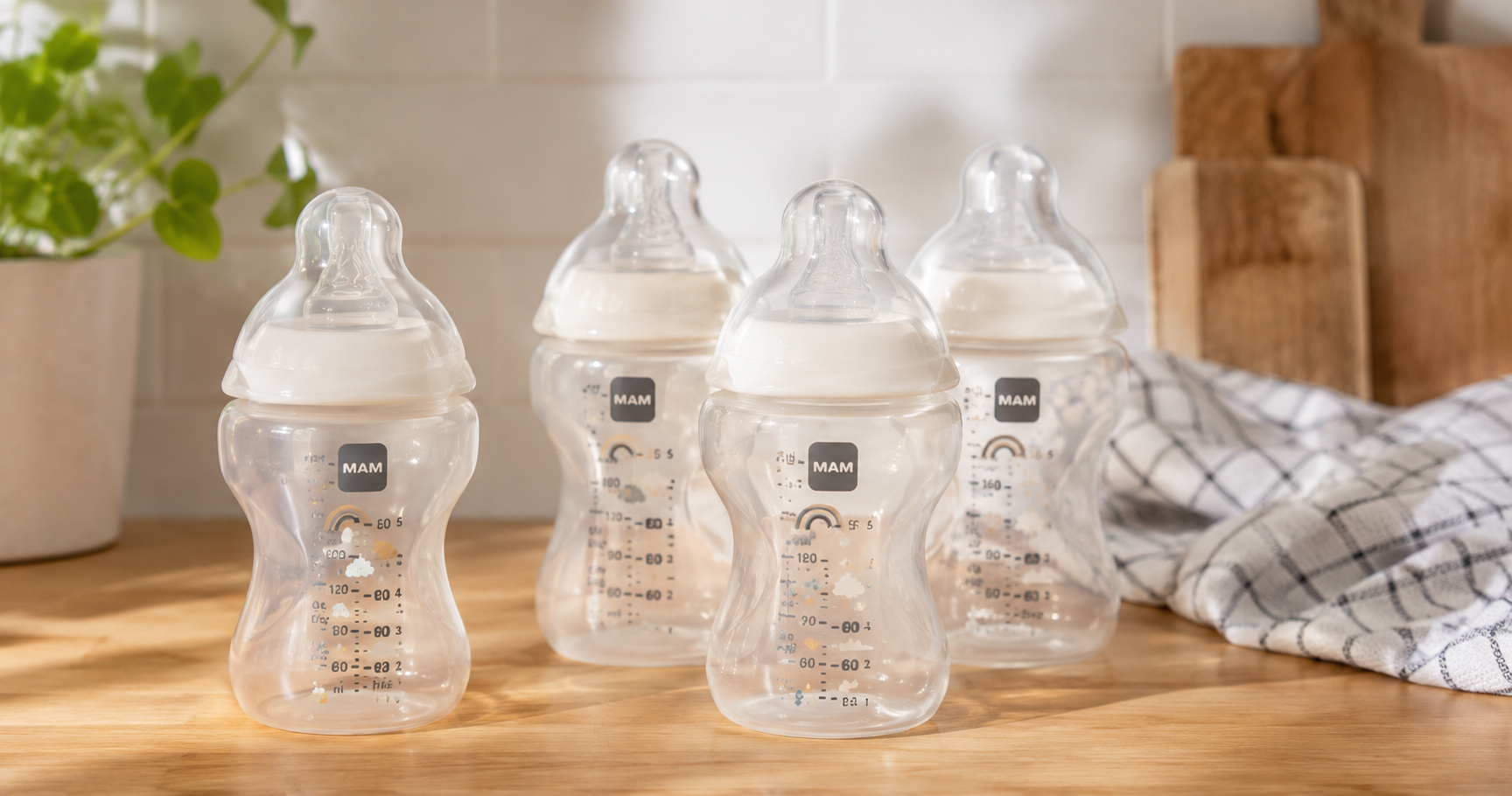
If you have ever paced the hallway at 2 am with a baby screaming from trapped wind, you will try anything. New parents buy these bottles for exactly that reason. But do they actually help?
In this MAM anti colic bottles review, we test the Easy Start 4×160 ml set on a windy, unsettled newborn. We explain how the vent system works, try the famous self-sterilising trick, and share what changed at feeding time. Here is the honest picture.
What You Get in the Box
- Four 160 ml bottles in soft unisex designs.
- Slow flow size 1 teats, the right speed for newborns.
- One extra medium flow size 2 teat for when your baby grows.
- BPA and BPS free materials throughout.
MAM is the UK’s number one baby bottle brand, and the Easy Start Anti-Colic set is its best seller. The 160 ml size is ideal for the small, frequent feeds of the first months.
How the Anti-Colic System Works
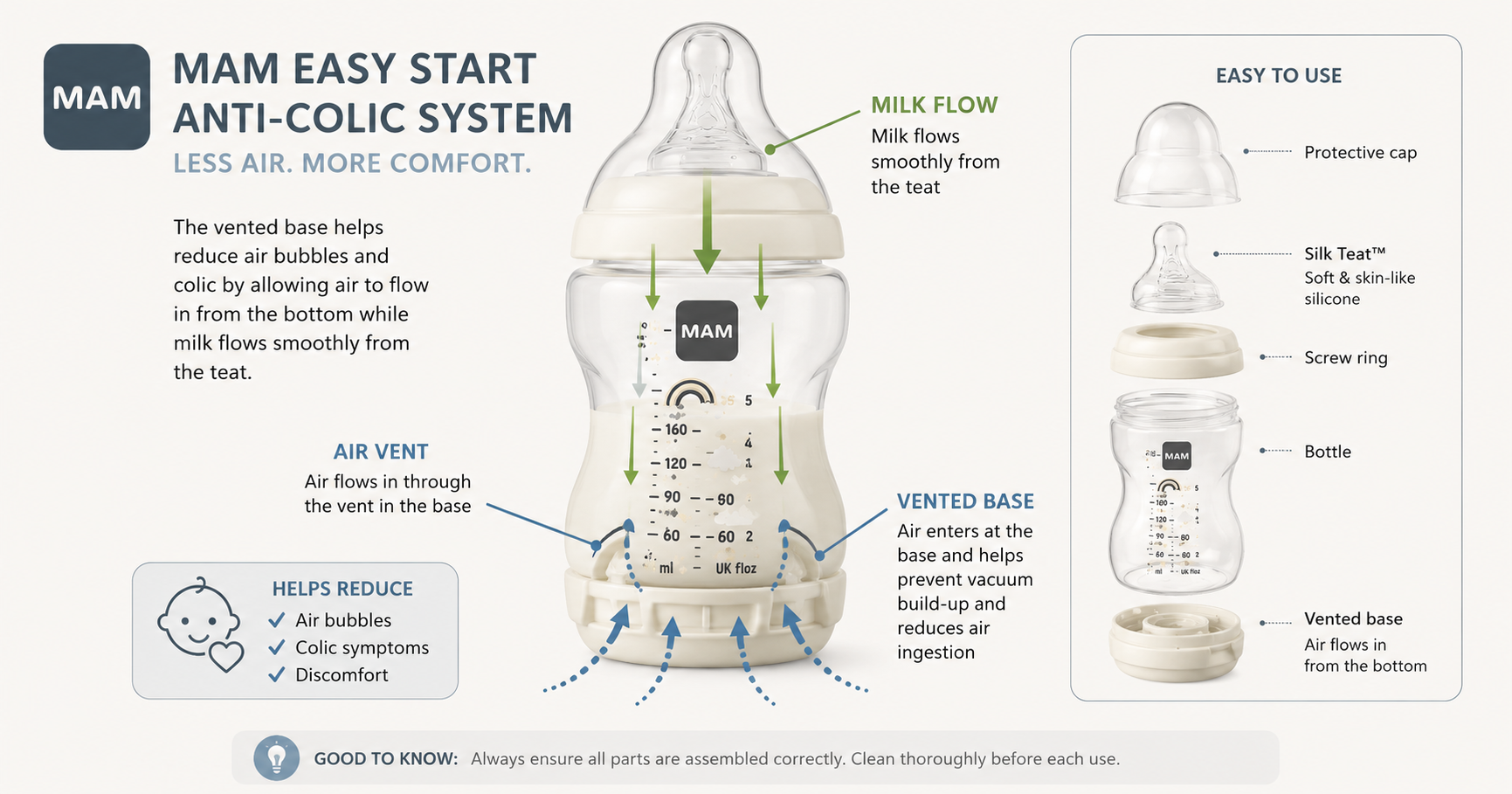
The clever part is hidden in the base. Each bottle has a vented bottom that lets air in from below while your baby drinks. Milk flows out smoothly, without the big bubbles you see in standard bottles.
Why does that matter? Bubbles in the milk mean air in the tummy. Air in the tummy means wind, hiccups, and those painful evening cries. With the vented base, your baby swallows milk, not froth.
MAM’s own research says around 4 in 5 parents reported fewer colic symptoms with these bottles. Treat that as a brand claim rather than a promise. No bottle cures colic. But less swallowed air is a real, sensible win.
The Self-Sterilising Trick, Tested
This is the feature that sounds too good to be true. Each bottle can sterilise itself in the microwave. You take the bottle apart, stack the parts with a little water in the base as the leaflet shows, and microwave for about three minutes. No steriliser machine needed.
We tried it on a weekend away at grandma’s house, and it worked perfectly. For travel, small kitchens, or backup when the steriliser is full, it is genuinely brilliant.
Two rules still apply. Always wash the parts in hot soapy water first, because sterilising is not cleaning. And keep sterilising all feeding equipment until your baby is at least 12 months old, as set out in the NHS guide to sterilising baby bottles. Check the leaflet for the right time for your microwave’s wattage too.
Our Real Feeding Results
We switched a combination-fed, windy six-week-old onto these bottles for two weeks. Three things stood out.
Less gulping. Feeds sounded calmer almost straight away. Fewer big air swallows, fewer splutters.
Easier evenings. The painful post-feed hour got shorter. Less arching, fewer hiccups, faster settling. Not a miracle cure, but a clear step down in misery.
An easy latch. The wide, flat teat suited a baby who also breastfeeds. Switching between breast and bottle caused no fuss.
How you feed matters as much as what you feed with. Slow, baby-led feeding makes any anti-colic bottle work better. Our step-by-step pace feeding demo shows you exactly how to do it.

The Honest Downsides
- More parts to wash. The vented base unscrews, so each bottle has five pieces instead of three.
- Leaks if rushed. Screw the base on properly, or a midnight feed gets messy. You learn this once.
- Small size. Hungry older babies will outgrow 160 ml, so you may need the bigger bottles later.
Who Should Buy Them, and Who Should Not
Buy them if your baby struggles with wind, hiccups, or unsettled evenings, you combine breast and bottle, or you travel and want sterilising without the kit.
Skip them if your baby is already feeding happily on another bottle, or you want the fewest possible parts to wash. Some babies simply prefer a different teat shape, like the breast-shaped Tommee Tippee Closer to Nature bottles.
One last reassurance. Colic is common, exhausting, and usually fades by three to four months. If your baby seems unwell or you are worried, speak to your health visitor or GP rather than buying more kit.
Getting Started: Three Quick Tips
- Sterilise everything before the first use. New bottles are not sterile out of the box.
- Start with the size 1 teats. Slow flow lets a newborn control the feed. Save the size 2 teat for around two to four months, or when feeds start taking too long.
- Hand-tighten only. Over-tightening the base can warp the seal and cause the very leaks you are trying to avoid.
Quick Questions
Are the bottles dishwasher safe?
Yes, on the top rack. Remember the dishwasher cleans but does not sterilise, so you still need the microwave step or a steriliser afterwards.
How often should I replace the teats?
Check teats regularly and replace them every one to two months, or sooner if they look thin, sticky, or damaged. Always replace a teat with any sign of a tear.
Will these bottles work for an exclusively breastfed baby?
Often, yes. The wide, flat teat is designed to feel familiar. But every baby has opinions, so buy one set first and test it before stocking up.
Final Verdict
So, are they really worth it? Our MAM anti colic bottles review says yes. Calmer feeds, easier evenings, and a self-sterilising trick that earns its keep on every trip. For windy newborns, this set is money well spent.
Get the MAM Easy Start Anti-Colic set here, or see all our feeding picks in the baby care shop