Tommee Tippee Closer to Nature Bottles: A Long-Term Honest Review
Most bottle reviews are written after a week. That tells you about the unboxing, not the bottle. Teats wear, plastic clouds, and babies change their minds.
So this Tommee Tippee Closer to Nature review comes after six months of daily use with a combination-fed baby. Hundreds of feeds, hundreds of washes, and a few lessons learned. Here is what actually held up.
What You Get
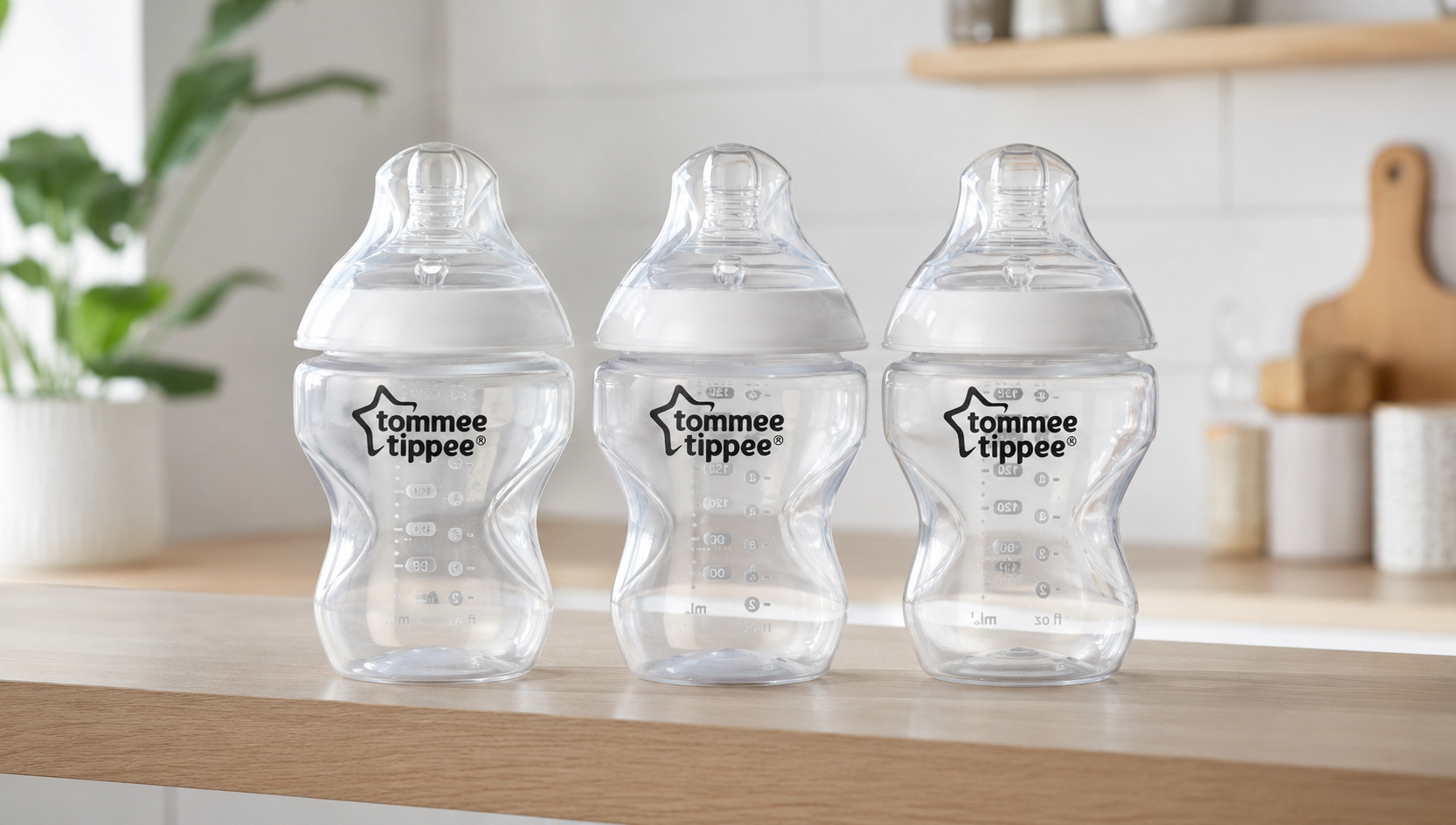
The Closer to Nature 3-pack gives you three clear 260 ml bottles with soft silicone teats in slow flow, the right speed for new babies. Each teat has a small anti-colic valve built in, and everything is BPA free.
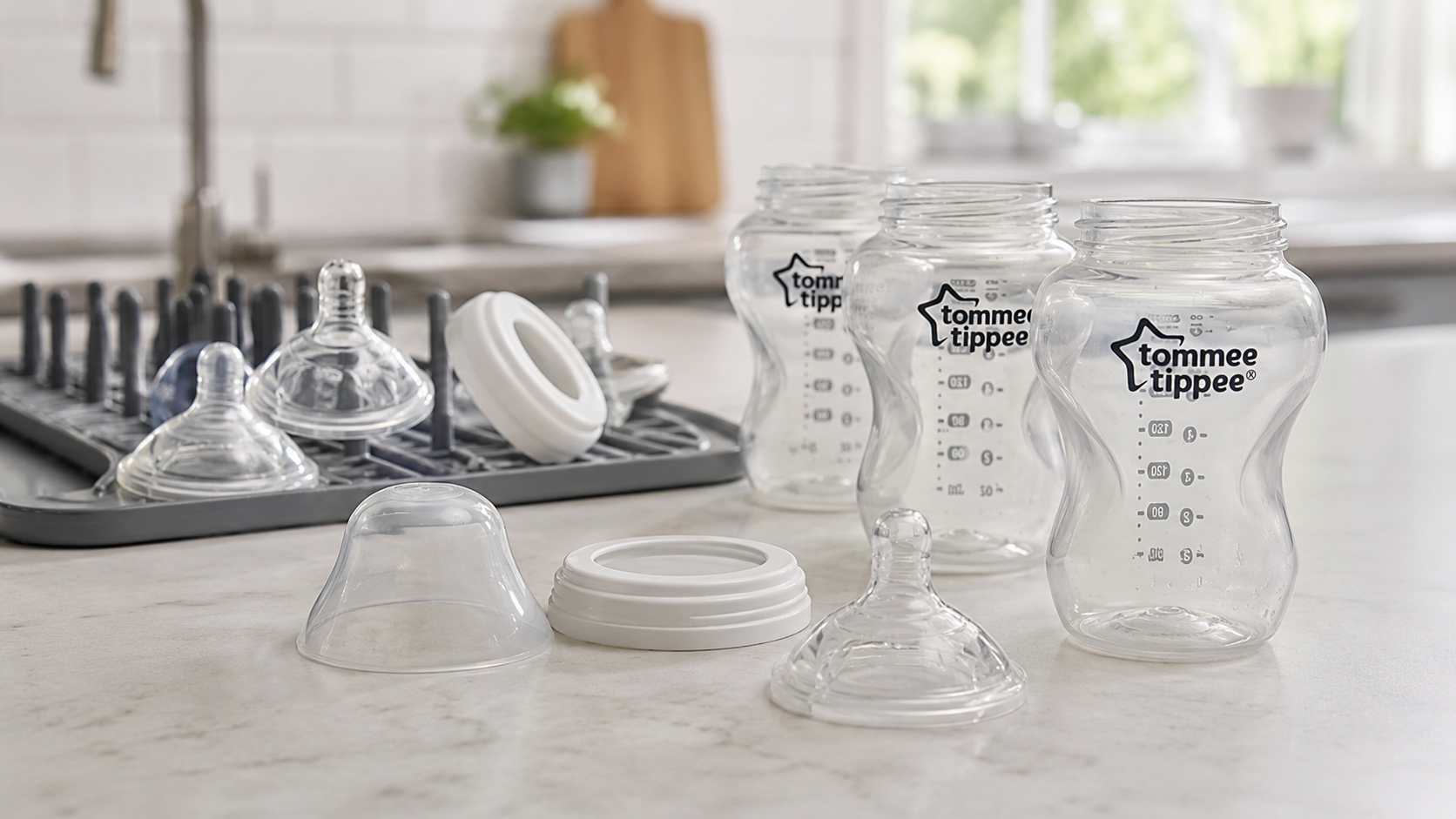
Note the simplicity. Each bottle is just four parts: bottle, screw ring, teat, and lid. After a week of washing bottles at midnight, you will understand why that matters.
The Breast-Like Teat Claim
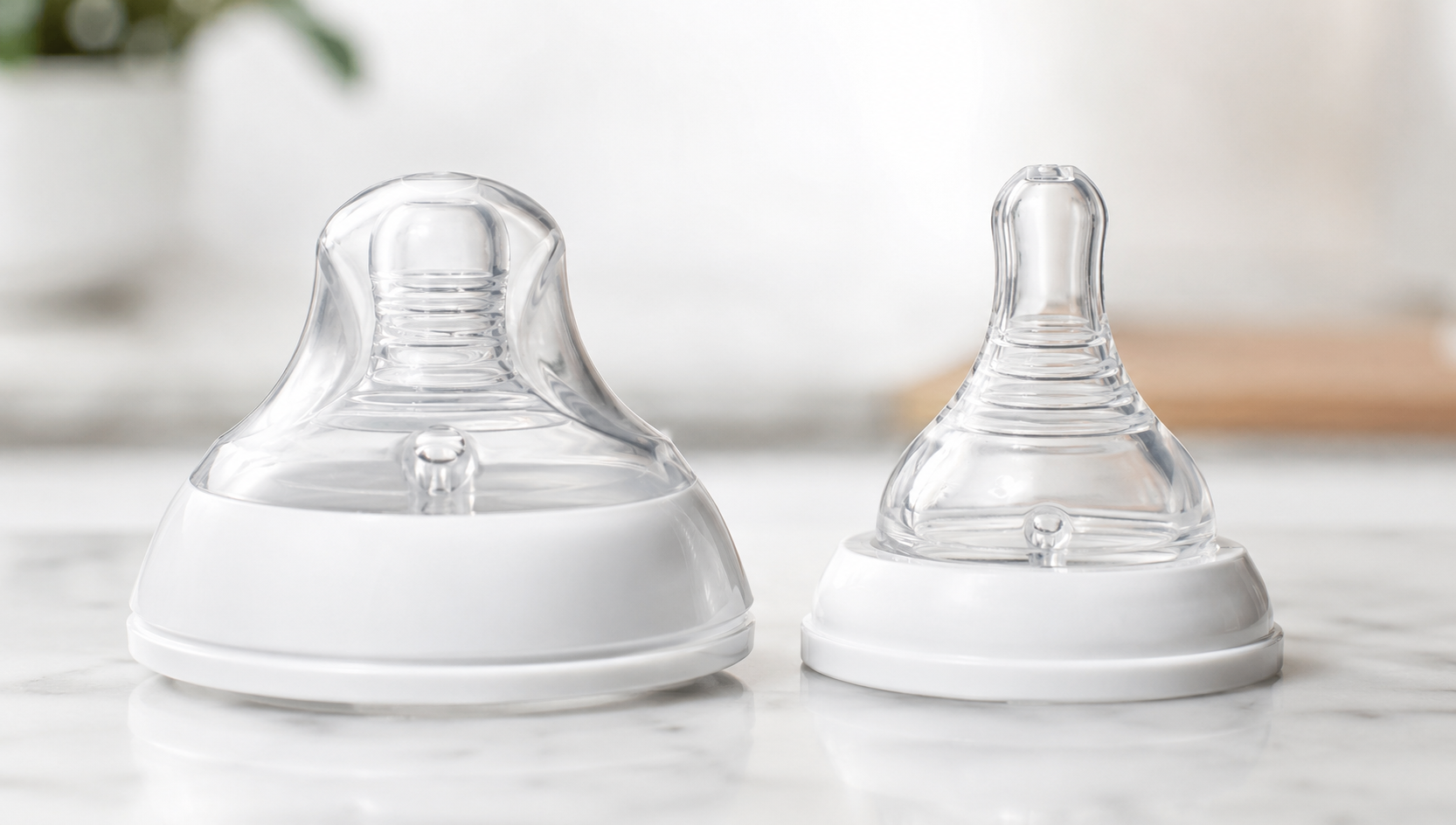
This is Tommee Tippee’s whole pitch. The teat is wide, soft, and shaped like a breast, so babies use a similar wide latch on both. Does it work?
For us, yes, and quickly. Our breastfed baby took the first bottle without a fight, which felt like a small miracle. Switching between breast and bottle across the day caused no confusion and no fussing at the next breastfeed.
One honest caveat: some babies refuse every bottle for a while, whatever the shape. That is normal baby behaviour, not a product fault. If yours is resisting, slow things down with our step-by-step pace feeding demo, which makes bottle feeds calmer and more breast-like in rhythm.
Anti-Colic Performance, Honestly
Each teat has a valve that lets air into the bottle so your baby swallows less of it. For our averagely windy baby, it did the job. Feeds were calm, burps came up easily, and evenings stayed civilised.
But let us be straight: a valve in the teat is the basic level of anti-colic design. If your baby is seriously windy or refluxy, a bottle with a full vented base works harder at the same problem. We compared the two systems in our MAM anti-colic bottles review, and for tough cases the MAM Easy Start set is the stronger pick. For most babies, the Tommee Tippee valve is enough.
What Six Months of Daily Use Taught Us
The teats wear first. Expect to replace them every six to eight weeks, and immediately if you spot any thinning or a tear. Replacement teats come in slow, medium, fast, and vari-flow, so the bottles grow with your baby.
The plastic clouds a little. After months of sterilising, the clear bottles turned slightly misty. Purely cosmetic. No warping, no leaks, and the measurement markings stayed easy to read.
One quirk to know. Very occasionally a teat collapses flat mid-feed if the valve gets blocked. Pause, loosen the ring slightly or re-seat the teat, and it pops back. Annoying the first time, a two-second fix ever after.
Washing stays quick. Four parts and a wide neck mean the bottle brush reaches everywhere. This is the bottle you grab most because it is the easiest to clean.
The 3-Pack Value
The 260 ml size is the sweet spot. It handles small newborn feeds with room to grow into bigger ones, so you are not buying a second set at four months. Three bottles is the practical minimum for rotation: one in use, one clean, one in the steriliser.
Price per bottle is among the lowest of the big brands, and since only the cheap teats need replacing, the long-term cost stays low. One rule never changes though: keep sterilising everything until your baby is at least 12 months old, as the NHS sterilising guidance sets out.
Pros and Cons at a Glance
Pros
- Wide, soft teat that breastfed babies accept easily.
- Only four parts, so washing and assembly are quick.
- Teats available in four flows, so the bottles last the whole first year.
- Strong value, both upfront and over time.
Cons
- Basic anti-colic valve, not a full vented system.
- Bottles cloud slightly after months of sterilising.
- Teats occasionally collapse mid-feed until you learn the quick fix.
Who They Suit, and Who Should Skip Them
Buy them if:
- You combine breast and bottle and want an easy switch between the two.
- You value quick washing and simple parts.
- You want trusted bottles without a premium price.
Skip them if:
- Your baby has serious wind or reflux. Go for a vented-base system instead.
- You want self-sterilising for travel, which these do not offer.
Quick Questions
When should I move up a teat size?
When feeds drag on and your baby seems frustrated or falls asleep working too hard, usually somewhere after three months. There is no rush, and slow flow suits paced feeding best.
Can I sterilise them in the microwave like MAM bottles?
Not on their own. Use a steam steriliser, cold water sterilising solution, or boiling, following the NHS methods linked above.
Do they fit breast pumps?
They pair directly with Tommee Tippee’s own Closer to Nature pumps, which makes pump-and-feed simple if you stay in the family.
Final Verdict
Six months on, our Tommee Tippee Closer to Nature review is full of quiet praise. No drama, easy latch, easy washing, and honest value that keeps improving as the months pass. 4.5 out of 5 for combination feeders.
Get the Closer to Nature 3-pack here, and find teats, sterilisers, and more in our baby care shop.